


Entries in technology (4)
What I do

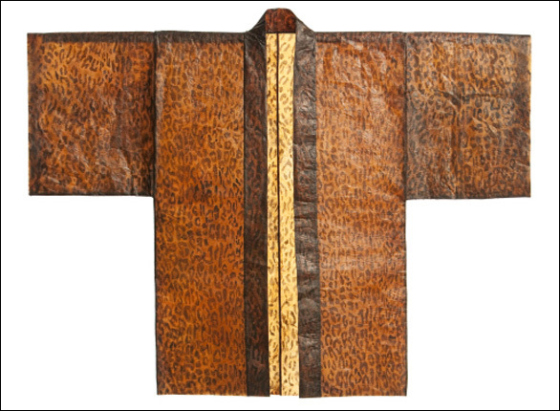
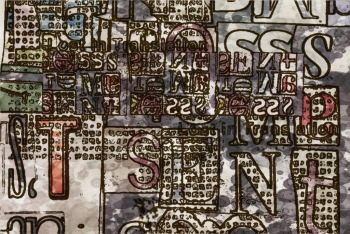
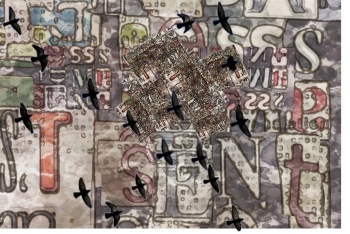
Flaming Eyebrows, detail art quilt
This post was originally published on Michele Foster's www.quiltinggallery.com. Check out the post and comments there, as well as great guest spots from some wonderful quilters.

Angels, saints, sinners, strange beasts. fire eye-browed women and prickly landscapes step out of the air and into my work. I can’t help it. These odd characters and scenes aren’t predetermined, they just happen. I don’t use patterns, rarely make sketches, refuse to pin, never measure (except at the very end), sometimes I don’t even worry about the back of my quilts and the knots and snarls that bedevil us all whether we admit it or pick them out or not.
Let’s get one thing straight here at the start. Some of you are traditional quilters. You are the backbone of the interest and the audience and most of the quilt store customers and you are skilled! I am not. A quilter really. Nor am I really very good at quilting. But I think I make good art. That happens to be made of fabric. And stitched, and usually three-layered.
I intentionally make contemporary textile paintings (see Lisa Call’s blog for her ideas about that) and they are quilted (free motion) and they are also fused.
Intensely interested in pattern and color and texture, paint just doesn’t work as a medium for my ideas, and, as an artist, it is my path and passion and calling to get my ideas out of my head and into the world in the best available materials. I began sewing at a young age, but the precision required by my home-ec teacher (and that dates me, right) was an unwelcome discipline and an unnerving challenge. So I went into theater and visual arts and then later became an arts and arts-in-ed educator, museum designer, writer and teacher (there’s even a new book for parents and grandparents who want to encourage creative kids, see www.newworldkids.org), but I kept coming back to cloth.
My personal revival came in a surface design course at the Southwest School of Art and Craft in San Antonio (where I now teach in the fibers department) and in a discovery that I could actually learn to paint and pattern and design fabric. Then I had to figure out what to do with the stacks of stuff I was making and I discovered art quilts. Among those who have influenced what I now do: Jane Dunnewold, Sue Benner, Leslie Jenison, Kerr Grabowski, Rayna Gillman, Lisa Call, African textiles, Mexican embroiderers, Guatemalan weavers, limestone layers, the Art Cloth Network, the International Quilt Festival (where I also teach) and lots more.
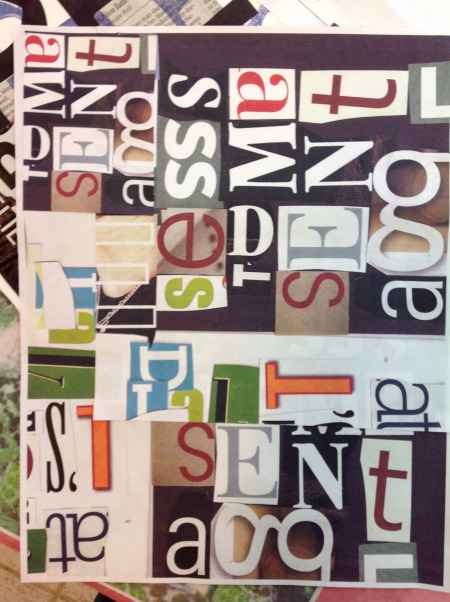
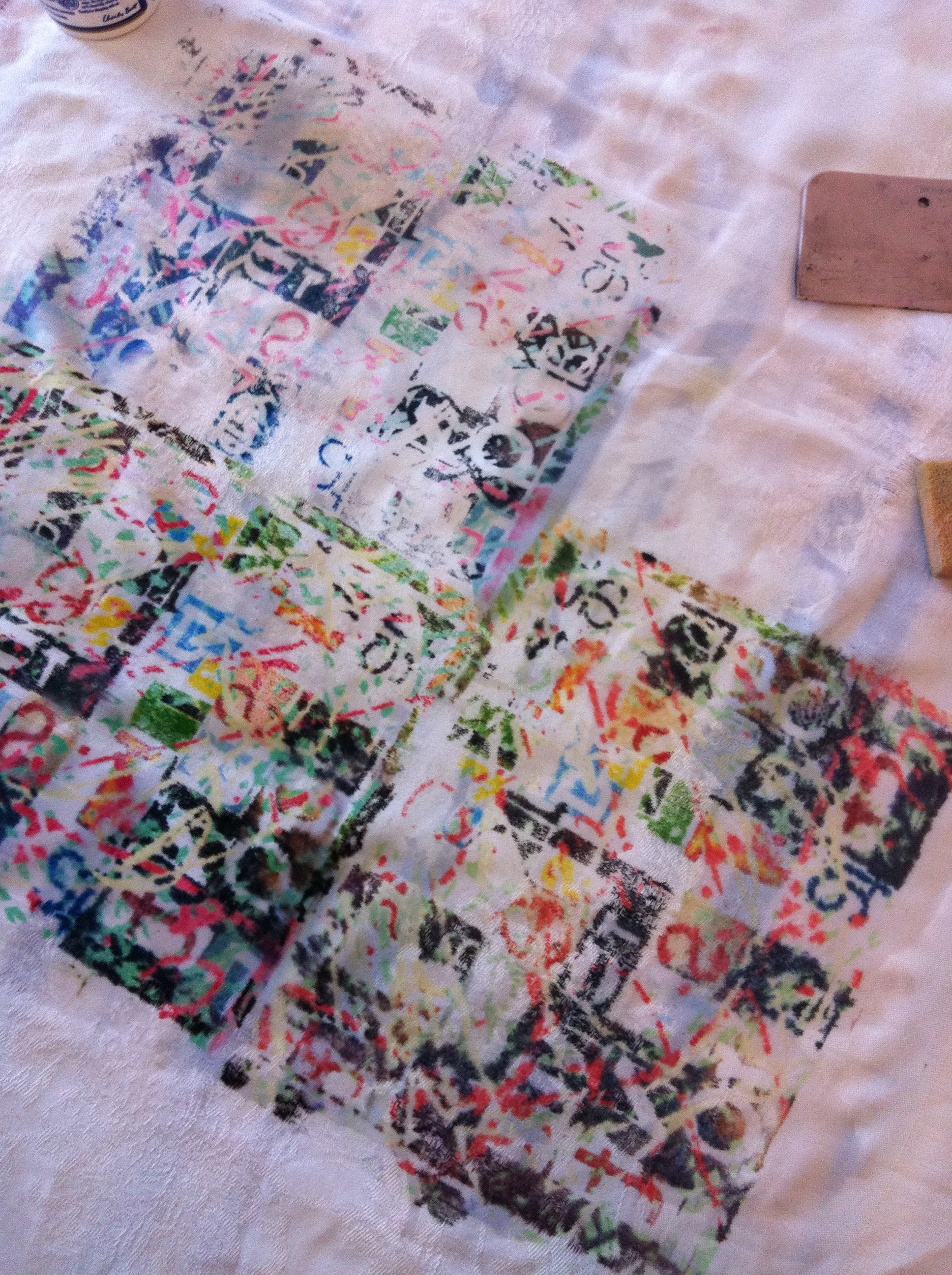
I told you what I don’t do much of in the first paragraph. What I do do: journal and observe, listen to my dreams, follow my obsessions, pile up cloth and look at the colors together, mull over design elements and sketch, sketch, sketch images, doodles and private marks then turn them into thermofax screens for printing paint and dye, improvise dyed fabric using Kerr’s methods of deconstructed screen printing, iron WonderUnder or Mystifuse to every piece I like, sometimes piece together long rows of 5’ strips and other background fabric, then start cutting with a vague idea of what it is that is speaking to me. Then I free-motion stitch the quilt, possibly even go back and print another layer of imagery on top of it all. Sometimes I mount my work on wooden frames, sometimes it just hangs on the wall.
And yes, someday I really do want to make a bed quilt. But I am terrified of the binding. And the basteing. I read you so that I will have the courage to try someday!
For those who comment here, or on my blog during the rest of the month of February, you’ll be entered into a drawing for a free copy of that book on creativity (it’s even good for grownups who aren’t around kids): New World Kids at www.newworldkids.org
The Big Leap; Learn as You Go

I am one of those foolhearty types who hates to read instruction manuals, dislikes asking for directions, heartily hates following linear to-do lists -- you get the picture. So it's probably no surprise that when I want to master something new, the best way for me is the sink or swim approach. 'Course I try to choose tasks that are intrinsically intriguing and tools that are intuitively operational. (And that, in a nutshell, is why mac is the only computer for me.)
This past year, I have become a webmaster by intention, building three passable sites, with I admit, not a line of code, just a lot of tinkering with built-in templates, both on the Squarespace site for New World Kids (Squarespace hosts this blog, too -- I love their interface and the support desk is great), for my own gallery website and a new website for Fiber Artists of San Antonio. That's the one that's just gone "live" and, while I hope to tinker and improve over the next few weeks, the basic architecture is up and running and even taking money via PayPal.
I used iWeb (part of the Macintosh iLife suite of tools) to build the FASA site and my gallery site, and with some help from my friends at the Apple Store I know pretty much the ins and outs of using that software. (I do highly reccommend the Apple One-to-One program -- $99 gives you a week of private tutoring from a kid whizbang expert at the Apple Store.)
PayPal and GoDaddy are not exactly what I would call intuitive sites, and I've had to buckle down and actually read instructions, usually about 40 times, before I get the kinks out of using their interfaces with my sites. But, it no longer terrifies me -- that's what jumping in the deep end gets you -- past your fear.
If you've been thinking about building a website, I say, dive, dive, dive. And if that or some other said-to-be-difficult task looms in your new year, consider whether an external deadline or expectation from a (unpaid) volunteer client (like the Fiber Artists were for me) might be that little push on the backside that you need. Don't be afraid to make mistakes, at least on the computer, few errors are actually fatal and most stupidities can be undone. I may never be a "real" webmaster, but at least now I know enough to design and put something up that I like and that does the job for client/s (me, FASA, our book). I certainly don't sneer at templates and WYSISYG editing programs -- they frankly just make me glad I never invested time in learning to write HTML.
I know, I know, my sites won't win any awards for innovation, real techie types will point our their shortcomings in style, elegance and probably speed, but I loved the experience of learning more about electronic media and how to work in some personal style on top of a template.
Teaching with Web 2.0
As I research options for my on-line course -- probably "Text on the Surface" after feedback from a number of readers on and off the site -- this video by Dr. Michael Wesch, a cultural anthropologist, came across my path. Synchronicity was working overtime -- Linda wanted me to see if because of the implications for her Mass Communications teaching and research, and it opens ups a whole host of possibilities for teaching with the aid of electronic, digital interfaces. He presents an overview of the educational issues of teaching and learning in a web 2.0 world, and says that no one, no matter his or her age, is starting from scratch with this media --"There are no natives here," he says, explaining that most of what is happening of relevance to educators today had been launched within the past 3 years, and that daily hundreds of other interfaces are being created, tested, marketed, and used or discarded. So, no excuses, you aren't too old. Even today's 18 year old is faced with the same challenges of learning these new tools. Most of them, Wesch says, are still working just superficially, with no experience either at actually using the creative potential of these new tools.
It's a fairly long piece -- and specifically directed to university professors teaching young people -- but if you are interested in the landscape of kids, media, information and teaching, it's well worth the time. Although my ambitions for using technology aren't that ambitious, I do think that as a teacher the meta-message about the learning environment is one that must inform my work, in and out of the studio. Obviously, my "learners" are already looking for something meaningful; most of you who might take a course are already self-selected -- no course credit here. You might just try the first 30 minutes, that covers most of the big ideas-- though the remainder is a fascinating look at how his students recreated world history and cultures through a simulation based on "rules" of anthropology and using web-based tools.
One of the key ideas in this longer piece is well presented in a shorter, visual piece, "Information R/evolution." That how we have traditionally thought about information, as a thing, that can be catagorized -- filed -- in one kind of linear way, is no longer the case. Now information can exist simultaneously in more than one category, can be user-defined (rather than "expert" defined) and is no longer defined to a material form. "There is no shelf."
Wesch also produced "The Machine is Using Us," an great piece produced in 2007 that became one of the most-watched videos in the blogosphere ever. If you haven't seen it, the link is here.
If you are interested in creating web-based learning portals for yourself, fear not. Here are a few places I have found to play around. The first two are wiki-like aggregators that you can customize, keep private or publish to the world. Flock is a social network friendly browser that puts Flickr, My Space, etc all on your home page, Ning is a social network site that lets you build pages and whole sites around interests and then lets people subscribe to them. Stumble is a nonlinear "earch" engine that lets you find web pages you didn't know to look for!
Please remember: YOU CAN NOT BREAK ANYTHING DOING THIS. You probably can't even screw up your computer unless you have no virus protection and use a PC and that's only if you start downloading a lot of strange applications. Check the site, make sure it's real and exists with actual content, not just links do other webpages,
No one is going to grade you or make you feel stupid except yourself. Yes, you are entering a public arena sometimes, but you control that. Most of the sites that I am exploring have a "private" function where only you have access to the material, links, tags that you upload or make use of. However, I would also challenge you to release some of your fears about going public on the web. I don't believe that I have opened myself up to harm, to stalking, to any physical danger by having a blog or by participaing in wikis (used authored sites). I have made many interesting connections with people whose ideas and input have stimulated my learning and my life. It is a new frontier, and we all can grow with it.
I'd love any meta-sites that you like to use. New ones appear everyday. Some last, some don't -- we are in the equivalent of the wild wild west frontier days here -- nearly lawless, but there are fortunes to be made.
Catching Up or Starting Fresh?
I find myself getting back into the blog after nearly a month away. Not even an intentional vacation from the page, rather a retreat from on-line life in favor of a packed August -- between exhibits, deadlines, workshops, and designing several new web-based projects, my calendar suffered a meltdown.
Perhaps more to the point, I've taken a vow to leave the computer in the studio -- or packed up in its tidy little briefcase -- during early morning and post "work hours," in the interest of sanity and domestic harmony. If this (blogging, et al) is important as part of my work, of my bigger picture of self in the studio, of the business of being the artist and teacher I want to be, then its worth doing as part of my work day. Frankly, the laptop was taking over my living room -- even the bedroom -- at all kinds of inappropriate hours. Inappropriate, because, well, live people deserve my undivided attention when I am in the same room with them. In order to step back from the brink, it seemed necessary to just shut it off for a bit, and decide how and when and what was most important to continue.
So we will see what that means. Exactly.
One issue, as I've come back online with the new month, was whether to try to catch up the record and my readers with all that's gone on -- two shows, three workshops, two trips, new art cloth projects and techniques, new classes planned and promoted. Yikes. No way. So we start fresh with today. With what's right now, as I sit here in the University Inn at Rutgers, a day early into town (New Brunswick, N.J.) for the Art Cloth Network meeting.
I have a visceral "new year" reaction to the first week after Labor Day, from 16 years of school calendars (back when schools still started after LD). The month has that new pencil, new notebook, new box of crayons feel and energy, so what better time to start on a virtual new slate. I've always considered myself lucky to have this second fresh start during one calendar year, don't you?
So here, besides the blog, are my fresh starts:
1. More time for just doing nothing. Letting quiet and peace make a space for what's new.
2. Saying "I'll think about it. Let me tell you tomorrow" before I automatically say "yes," to a request, no matter how important or how much fun it intimates.
3. Take a yoga or NIA class weekly -- I need the class structure to move myself into fitness. The sweets of summer have gone to my waistline.
4. At least two "no drive days" each week. With planning, I can do that. Without planning I spend way too many hours in the car.
That's enough. See number 1. And number 2, even when I am the one doing the asking.